Underground Lines Placed Before You Build
Utility installation services in Searcy prepare trenches and routes for water, electric, and gas lines on new construction sites.
Running utilities after your house pad is graded or your driveway is poured in Searcy means tearing up finished work and redoing compaction. Your water, electric, and gas lines need to be trenched and placed before final grading so the site stays intact and your construction schedule does not repeat steps. Waiting too long to install utilities delays inspections and pushes back the rest of your build.
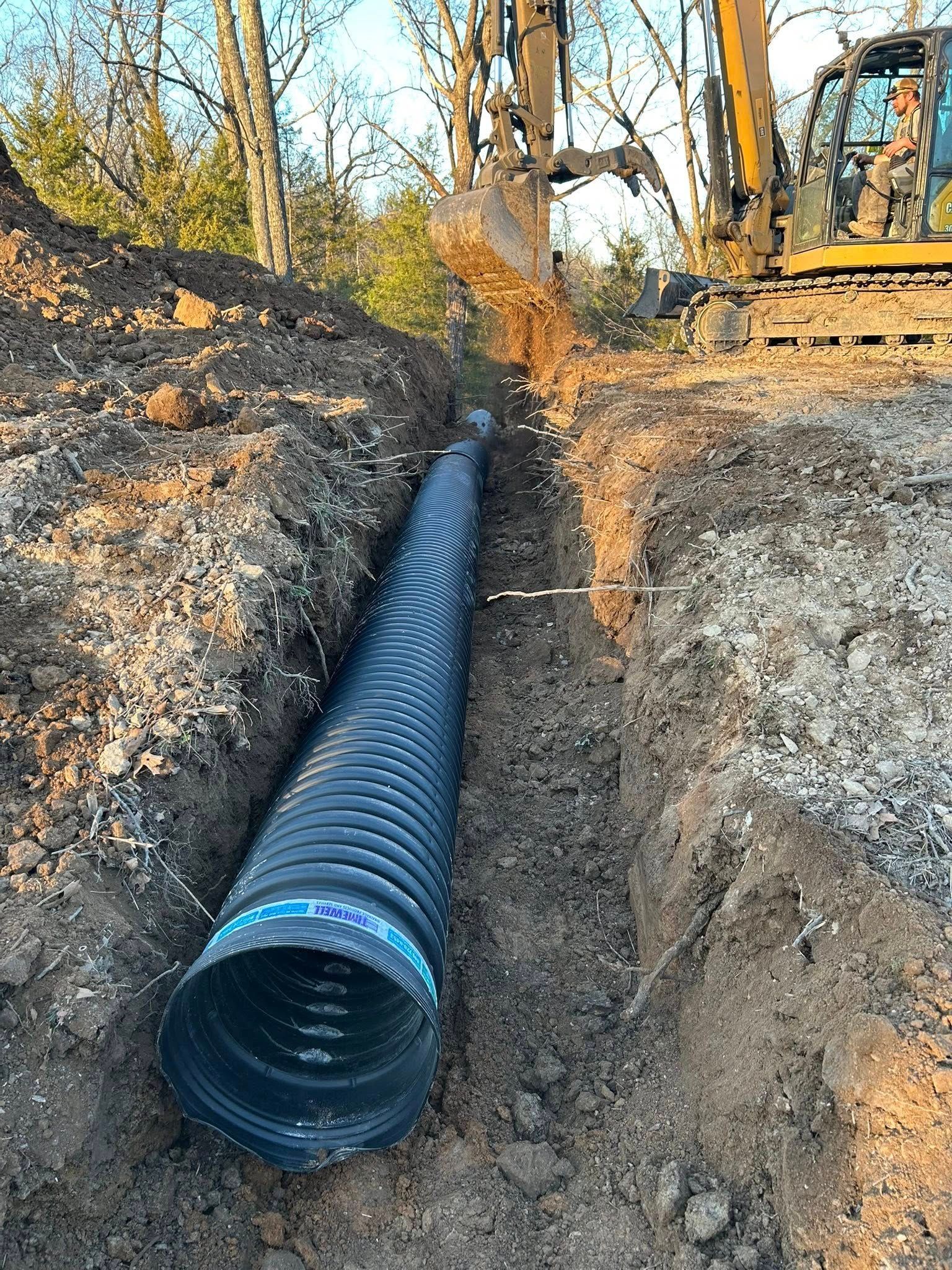
Septic Solutions and More, LLC installs underground utilities for new construction projects, coordinating trenching and placement with septic work, house pad preparation, and driveway installation. The process includes digging trenches to the correct depth, placing conduit or pipe as specified, and backfilling with compacted soil to prevent settling. Utility installation is scheduled so that lines are in place before final grading and surface work begin, reducing the need for rework or surface repairs.
If you are building in Searcy and need underground utilities installed before site work is completed, reach out to discuss your timeline and coordinate the sequence of work.
Placement and depth affect inspections and long-term function
Trenches in Searcy are dug to the depth and slope required by local codes and your utility provider, with separate routes for water, electric, and gas to avoid conflicts. Conduit or pipe is placed in the trench and positioned according to the site plan provided by your builder or engineer. Backfill is added in layers and compacted to match the surrounding soil density.
Once the lines are installed and backfilled, the surface is graded smooth so that driveway base, house pad finish work, or landscaping can proceed without disruption. You will notice that the ground over the trench looks and feels the same as the rest of the site, with no soft spots or depressions that could cause settling later. Proper installation also means your utility inspector can verify depth and placement without requiring excavation or guesswork.
Utility installation does not include connecting lines to the meter, pole, or main supply, as those tasks are typically handled by licensed electricians, plumbers, or utility company crews. The service covers trenching, placement, and backfill only, but it is coordinated with septic installation and pad preparation when those services are part of the same project. This sequencing reduces site disturbance and keeps your construction schedule moving in the correct order.
Most property owners ask about trenching depth, coordination with other site work, and inspection requirements before scheduling utility installation.
Timing questions come up early in the planning process
Septic Solutions and More, LLC installs underground utilities for new construction sites across Searcy, working with builders and property owners to coordinate trenching with septic, grading, and driveway work. If you need utility lines placed before your project moves forward, contact us to review your site plan and schedule the installation.